
Crown Reduction Pruning
Reduce tree size, lessen branch loading, and improve clearance while preserving the health, structure, and natural form of your trees.
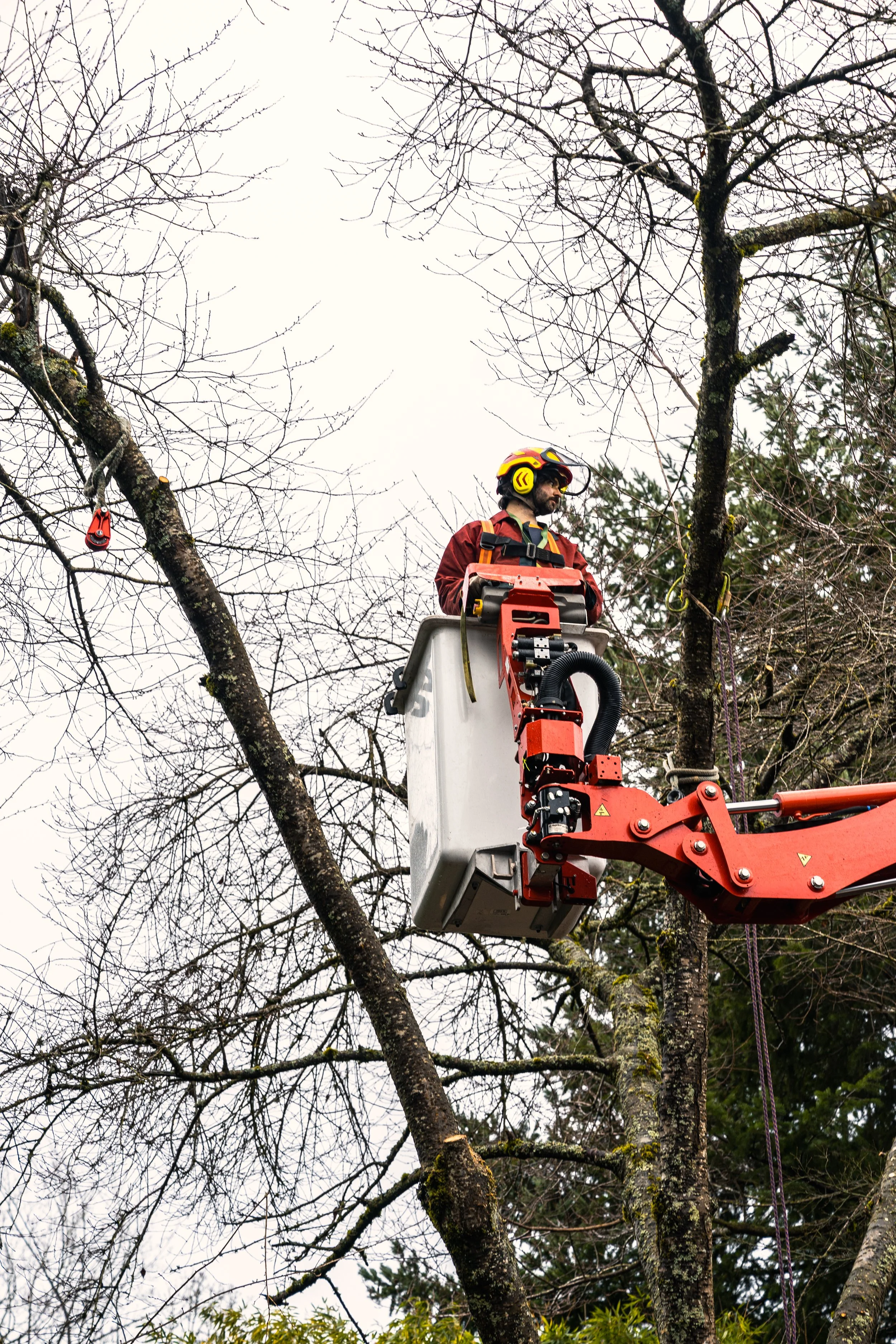
Crown reduction is a specialized pruning technique used to decrease the height or spread of a tree while maintaining its natural appearance and structural integrity. Unlike topping, which indiscriminately removes large portions of the canopy, crown reduction relies on carefully selected reduction cuts that redirect growth to suitable lateral branches. When performed correctly, crown reduction can help manage tree size, reduce end-weight loading, improve clearance from structures, and mitigate risk while preserving long-term tree health.
Our ISA Certified Arborists evaluate each tree's species, condition, structure, and management objectives before recommending crown reduction. Because reduction pruning permanently alters a tree's canopy, it should only be performed when appropriate and with a clear understanding of the tree's biological response. We provide crown reduction services throughout Portland, Beaverton, Hillsboro, Tigard, Lake Oswego, West Linn, and the greater Portland Metro area.
Crown reduction and tree topping
These are often confused, but they produce dramatically different outcomes.
Crown reduction uses proper reduction cuts to shorten limbs back to suitable lateral branches capable of assuming terminal growth. This approach maintains canopy structure, reduces stress on the tree, and promotes healthier long-term growth.
Tree topping, on the other hand, involves cutting branches back indiscriminately without regard for branch structure or tree biology. Topping often leads to weakly attached regrowth, increased decay, excessive sprouting, and a shortened lifespan.
Whenever possible, professional arborists seek alternatives to topping through proper crown reduction, structural pruning, or long-term canopy management.
What about Topping a tree?
While topping is generally not recommended and is rarely considered a best management practice, there are situations where significant canopy reduction may be explored as part of a broader risk management or tree retention strategy.
Examples may include severely compromised trees, trees with limited retention options, utility conflicts, redevelopment projects, or situations where the alternative is complete removal. In these cases, our arborists evaluate the potential risks, benefits, expected tree response, and long-term management implications before making recommendations.
Our goal is always to help clients make informed decisions based on tree biology, site constraints, safety considerations, and their overall property objectives.
-
Crown reduction is a pruning technique that decreases the height or spread of a tree by selectively shortening branches to appropriate lateral limbs. The goal is to reduce size while maintaining the tree's natural structure, health, and appearance.
-
Crown thinning primarily reduces canopy density, while crown reduction decreases the overall size of the canopy. Crown reduction may be appropriate when a tree has outgrown its available space, requires clearance from structures, or has overextended limbs that need weight reduction.
-
No. Proper crown reduction uses carefully selected reduction cuts that preserve branch structure and encourage healthy growth. Topping involves indiscriminate cuts that often result in decay, weak regrowth, and increased maintenance requirements. Professional arborists generally recommend crown reduction over topping whenever feasible.